An Organic Learning Agenda
How a lifetime of curiosity helped shape a career I never planned
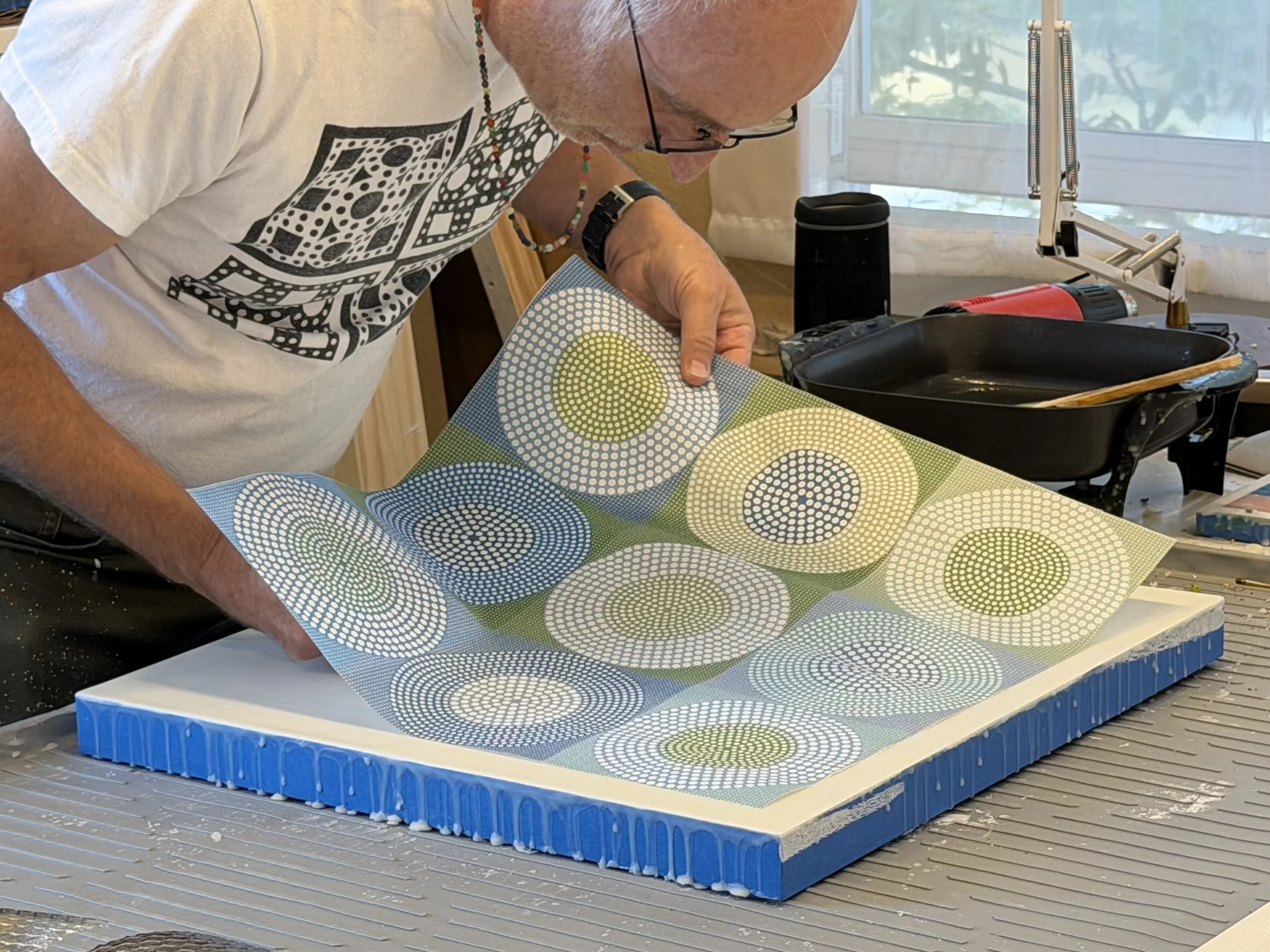
Caption: At work in my Provincetown studio, nearly a decade into a career I never could have planned.
In 2017, after 24 years at Fidelity Investments, I left a career that had been enormously rewarding. I'd spent much of my professional life helping businesses think about their futures, develop strategies, and build plans to achieve their goals. By the time I left, I was leading Fidelity's Business Consulting organization.
You might assume that someone with that background would have approached his next chapter with a carefully constructed plan, a set of objectives, and a clear picture of what success would look like.
Not even close.
I had no idea where becoming an artist was going to take me. In fact, I wasn't even thinking about becoming a fine artist. I was interested in making things, exploring different materials, and seeing what I could learn. I didn't have a five-year plan or a particular destination in mind.
What I had was curiosity and something I've come to think of as an organic learning agenda. I'd discover something that interested me, pursue it, learn what I could, and often find that it led to something else.
Looking back, I realize I'd been doing that for decades. I was preparing for a future I couldn't yet imagine.
The learning started long before the career change
I started quilting in college and returned to it from time to time over the years. In 2002, as Scott and I were preparing for Sam's arrival, I made him a quilt featuring colorful Hawaiian shirts and ukuleles. I arranged the appliquéd shapes in a repeating grid, alternating the backgrounds and surrounding them with a brightly patterned border.
I was making something for our son, not thinking about developing an artistic style. But looking at that quilt today, I can see elements of the visual language that would eventually find their way into my paintings. The geometry, repetition, color relationships, and variations within a structured composition were all there.
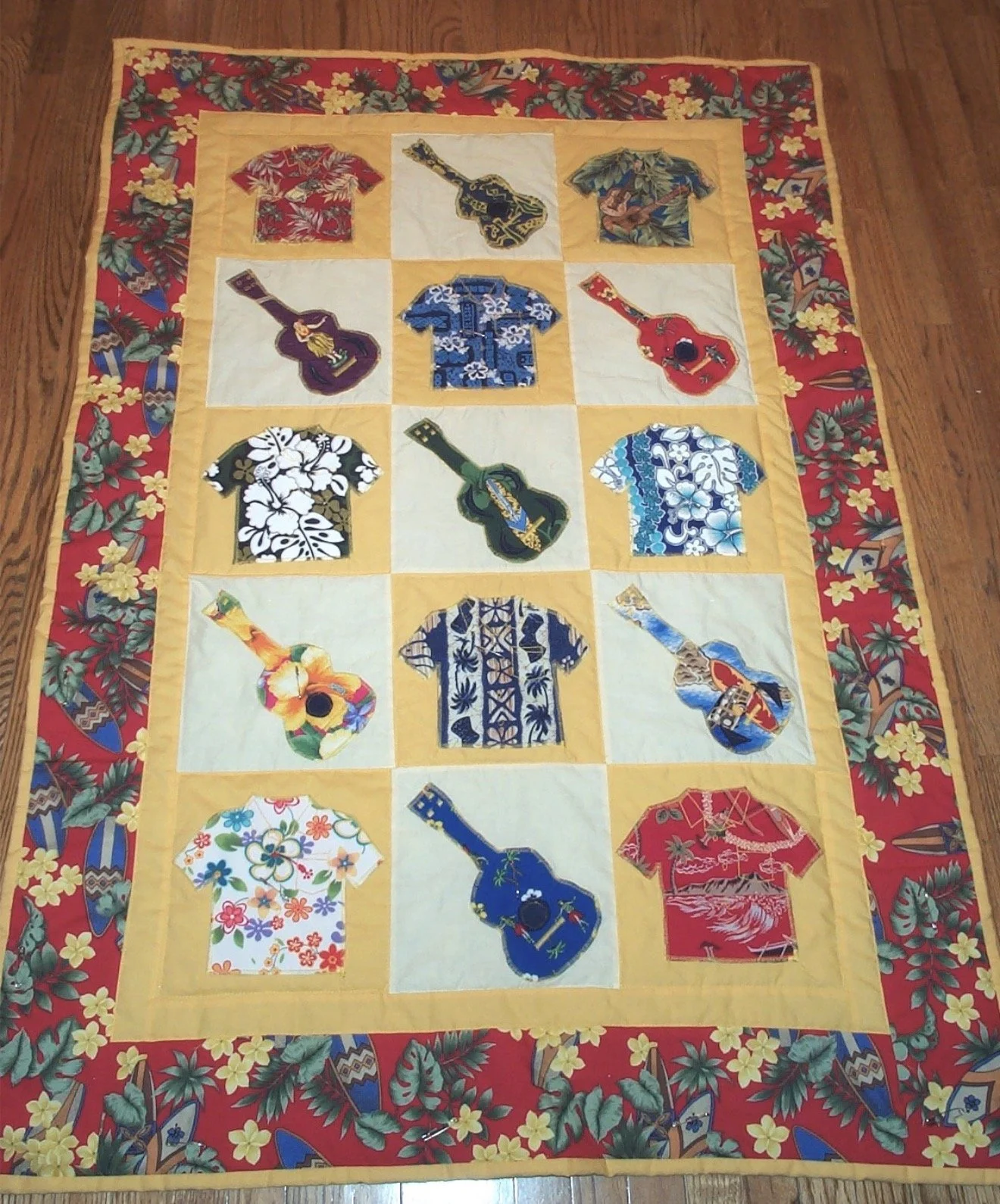
Made in anticipation of Sam's arrival in 2002. The geometry, repetition, and color relationships would resurface in my artwork years later.
As my interest in photography grew, I became curious about digital imaging. I started teaching myself Photoshop through courses on Lynda.com and eventually moved on to Illustrator. Much of that learning happened at night, after Scott and I had put the kids to bed. I'd spend hours working through tutorials, experimenting, and figuring out how to do things that interested me.
There was no professional objective. I wasn't pursuing a certification or preparing for a career change. These were hobbies, and I was learning simply because I enjoyed it.
What's remarkable to me now is how important those seemingly unrelated interests would become. Quilting introduced me to a visual language built around geometry and pattern. Photography led me to digital tools that would eventually become central to my artistic process.
At the time, I had no reason to connect them.
My first reinvention
When I left Fidelity, I began exploring the world of making things more seriously. I started etching glass and making candle lanterns from bamboo. I joined a makerspace, partly because I wanted access to equipment I didn't have at home, but equally because I wanted to be around other people who enjoyed creating things.
I loved being part of that community. People were working with different materials, sharing techniques, solving problems, and learning from one another. There was always something interesting happening, and I was constantly discovering things I wanted to try.
What began as a creative exploration gradually became a wholesale business. By 2019, I was exhibiting at major trade shows, introducing my products to retailers, and learning the ins and outs of selling to stores. I attended shows in mid-2019 and again in January and February 2020.
It was exciting. I was building something of my own, drawing on my business experience while learning an entirely new industry. I was enjoying the combination of making products and figuring out how to bring them to market.
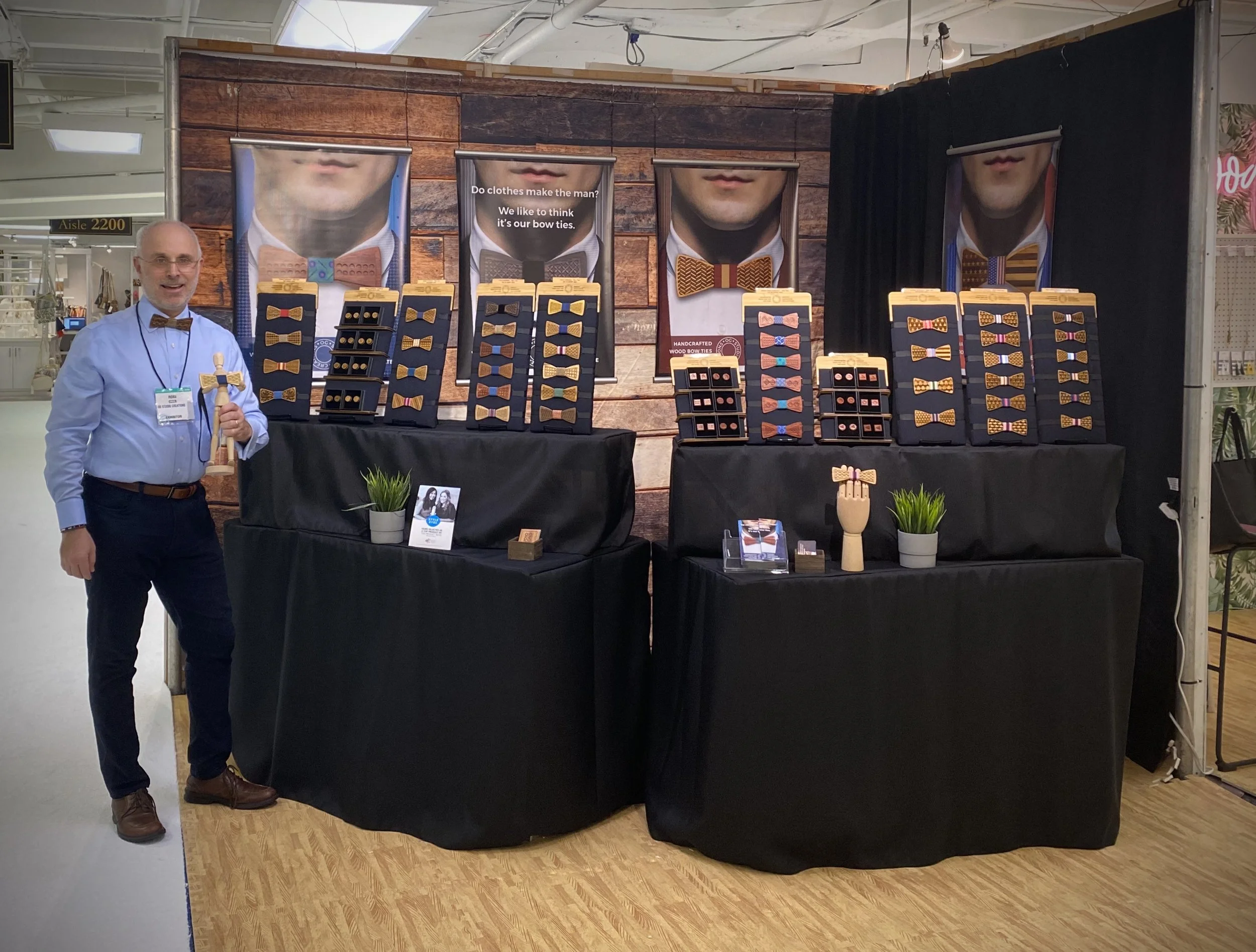
My first creative business grew from experimenting with materials into exhibiting products at wholesale trade shows.
And then COVID hit.
The wholesale market changed almost overnight. Trade shows disappeared, retailers were struggling, and the business I'd been developing suddenly faced a very different future.
I had to rethink what I was doing. It was disappointing, of course, but I also found myself doing something that had become familiar: following my curiosity into new territory.
Finding my way to encaustic
Along the way, I'd also been making bow ties, another creative pursuit that encouraged me to experiment with materials. I began incorporating resin, which sparked a broader interest in mixed media. I became increasingly curious about combining materials, building surfaces, and creating texture.
That curiosity led me to follow an artist and teacher online, where I discovered encaustic painting.
I was intrigued by the idea of working with heated beeswax and pigment, building layers, manipulating surfaces, and exploring the possibilities of a medium that was completely new to me. So I started learning.
I didn't know whether encaustic would become a lasting interest or simply another stop along the way. But the more I explored it, the more possibilities I began to see.
And then something interesting happened. All those earlier interests started coming together.
The geometric patterns I'd explored through quilting resurfaced in my compositions, particularly in my reinterpretations of the traditional Drunkard's Path quilt block. Illustrator, which I'd taught myself years earlier, became the tool I used to develop those compositions. My experiments with different materials had prepared me to work with wax, pigment, and texture.
What had seemed like a collection of unrelated hobbies and experiments was becoming a coherent artistic practice.
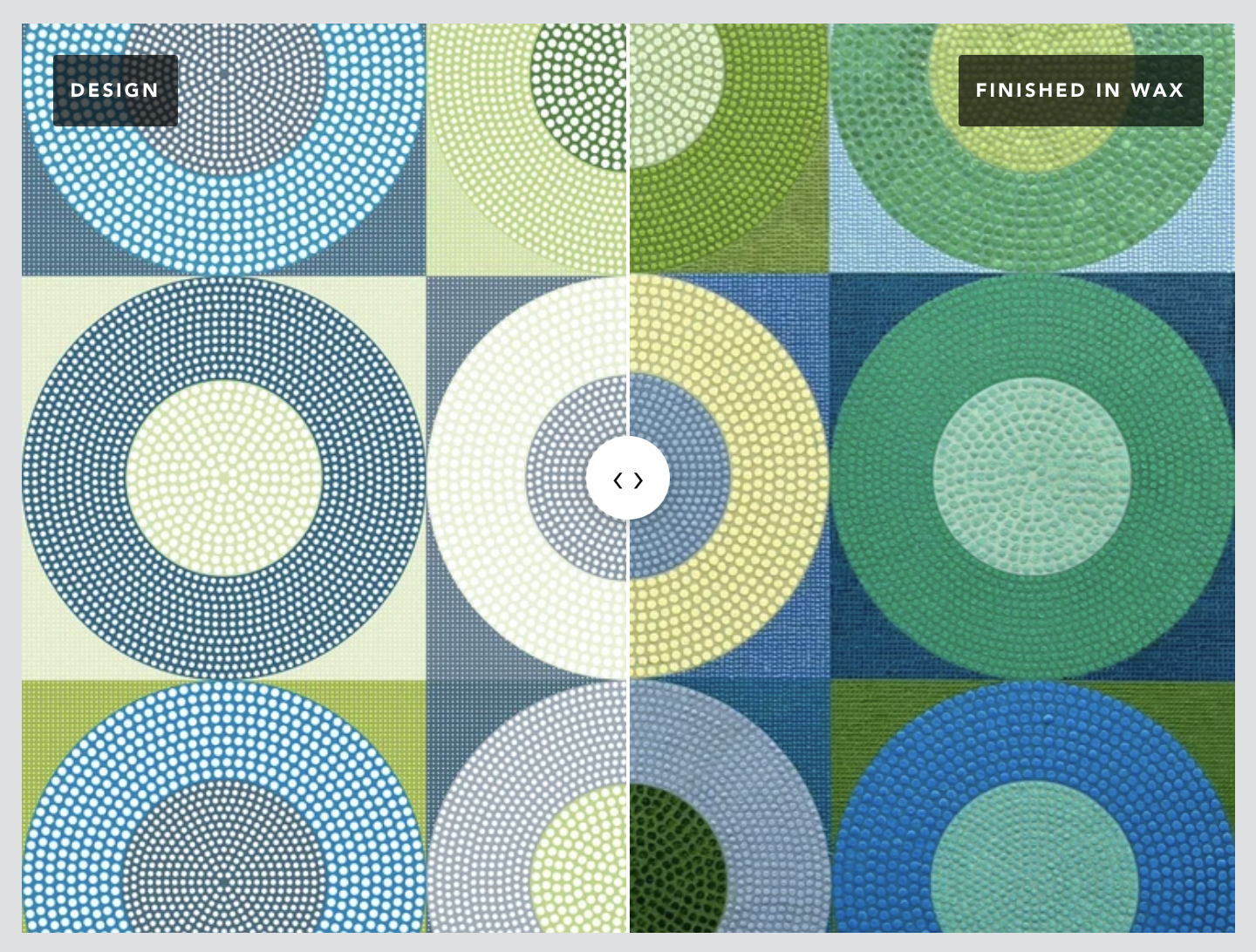
From digital design to encaustic painting. Skills I originally developed as a hobby are now central to my creative process.
Today, my work begins with geometric designs developed digitally and transferred to an encaustic surface. Much of the texture comes from thousands of individual marks made with a heated stylus, a process that combines the precision of digital design with the physical experience of working by hand.
Even within that process, I'm constantly experimenting. What happens if I change the relationship between shapes? What if I limit the palette? What if I take a familiar geometric block and rearrange it in a completely different way?
Those questions have led to entire bodies of work, including Radiant Circles, Patterned Threads, and Chromatic Conversations. And just when I think I've explored every possibility, I find something else that interests me.
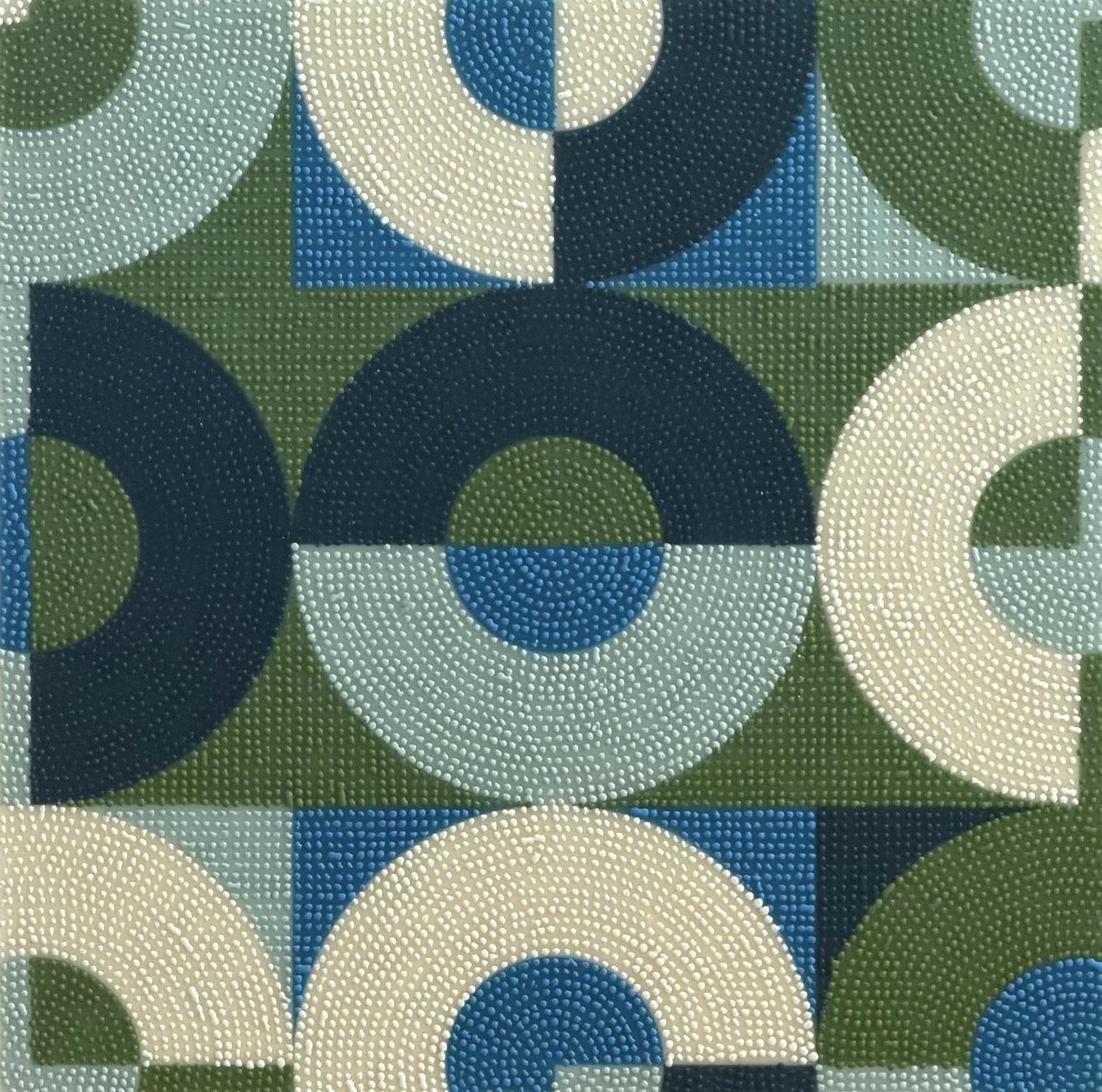
Thousands of individual marks give the work its texture, transforming a precise digital composition into something made entirely by hand.
The business followed the art
As my artistic practice developed, I began learning about another side of the art world: galleries, exhibitions, art fairs, collectors, pricing, and marketing.
Here was another interesting twist. I'd spent decades advising businesses on strategy, yet I'd entered this chapter without a business strategy of my own. The business was developing in response to the work rather than the other way around.
My Fidelity experience certainly helped. I understood the importance of relationships, presentation, financial discipline, and learning from results. But the art world was new territory, and I had plenty to learn.
I've discovered that making art and selling art require very different skills. A successful exhibition doesn't necessarily predict success at an art fair. A painting can attract enormous attention without finding a buyer, while another may connect immediately with someone who walks into a gallery.
I've had exhibitions that exceeded my expectations and others that left me wondering what I could have done differently. Each experience has taught me something about my work, my audience, and the business I'm building.
And that's become another part of my organic learning agenda.
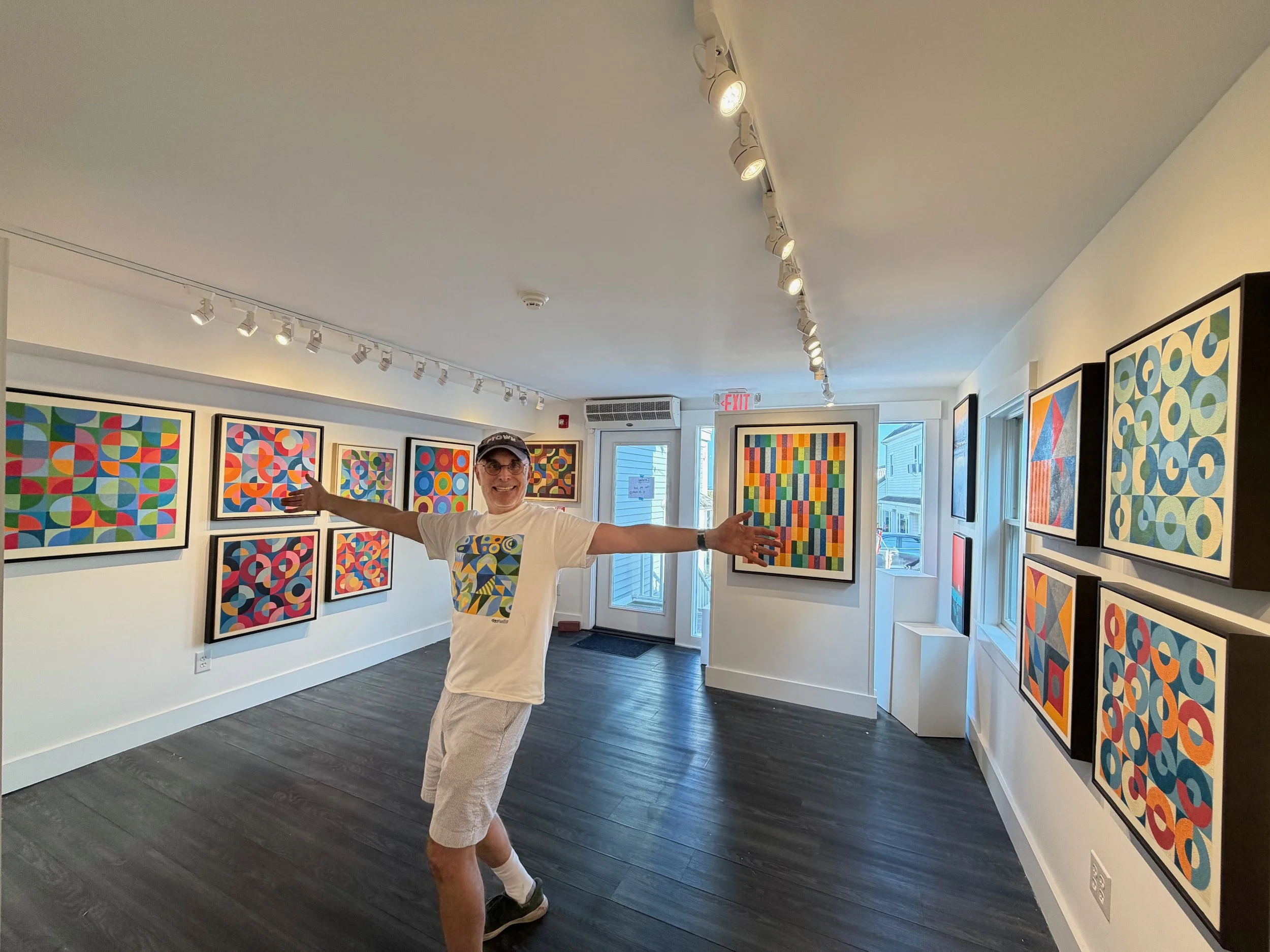
My 2026 solo exhibition in Provincetown. What began as a series of creative experiments has grown into an active gallery and exhibition practice.
Starting over without starting from scratch
One of the things I've been thinking about is the notion that changing careers later in life means starting over.
In some ways, it does. I entered the creative world with a great deal to learn. I had to become comfortable being a beginner again, asking questions, making mistakes, and sometimes investing considerable time in something that simply didn't work out.
But I wasn't starting from scratch.
Those 24 years at Fidelity didn't disappear when I left. Neither did the judgment, discipline, problem-solving skills, or understanding of people I'd developed over my career. And the interests I'd pursued outside of work, sometimes for decades, turned out to be just as valuable.
I was bringing all of those experiences into a new setting, often finding uses for things I'd learned without any particular purpose in mind.
I also recognize that I was fortunate to have the financial flexibility to explore without needing immediate income from my creative work. That gave me room to experiment, make mistakes, and allow things to develop at their own pace. Not everyone contemplating a career change has that advantage, and I don't want to minimize its importance.
What I find especially rewarding now is the freedom to decide what interests me and where I want to invest my time. I can pursue an idea simply because I'm curious about it, without knowing whether it will lead to a finished painting, a new series, or something entirely unexpected.
A different way to measure success
In my former career, success was relatively easy to define. There were organizational goals, financial measures, professional responsibilities, and opportunities for advancement. You knew what you were working toward, and there were established ways to evaluate how you were doing.
Today, success is a little more complicated.
I care about selling my work. I want the business to grow, reach new collectors, and build lasting relationships with galleries. I'm still ambitious, and I don't see any contradiction between creative fulfillment and commercial success.
But some of my most satisfying moments have nothing to do with a sale. It's discovering an unexpected relationship between colors, finishing a painting that took me somewhere I hadn't anticipated, or hearing someone describe what they see in my work and realizing they've connected with it in a way I hadn't considered.
I enjoy the business side, too. Building relationships, exploring new markets, and figuring out how to reach people who might connect with my work are all challenges I find interesting.
Perhaps the biggest difference is that I'm now defining success on my own terms.
Still learning
I've been thinking about all of this because I've been invited to talk about my career transition for an interview on a YouTube channel called Best Careers Over 50. The conversation will explore why I left Fidelity, how I found my way into art, and what advice I might offer someone considering a major career change later in life.
Preparing for that conversation has made me realize how little of this journey I could have predicted.
When I was quilting in college, I wasn't imagining a future as an artist. When I was learning Photoshop and Illustrator after the kids went to bed, I wasn't preparing to leave Fidelity. When I joined a makerspace and began making products, I wasn't planning a career in fine art. And when COVID disrupted my wholesale business, I certainly didn't know it would lead me toward encaustic painting.
Yet each of those experiences contributed something to what I'm doing today.
I don't think everyone needs to leave a successful career and pursue something completely different. Nor do I think following your interests automatically leads to a fulfilling or financially sustainable second career. There's a lot of hard work involved, and plenty of uncertainty.
But I do think we sometimes put too much pressure on ourselves to know where we're going before we allow ourselves to begin.
For me, the most valuable learning often happened when I wasn't trying to accomplish anything in particular. I was simply interested in something and wanted to know more. Years later, those experiences found their way into my work in ways I never could have anticipated.
Nine years after leaving Fidelity, I still have an organic learning agenda. I'm still experimenting, still asking questions, and still discovering connections between things that once seemed entirely unrelated.
And I still don't know exactly where it's going to take me.
I'm perfectly happy with that.