



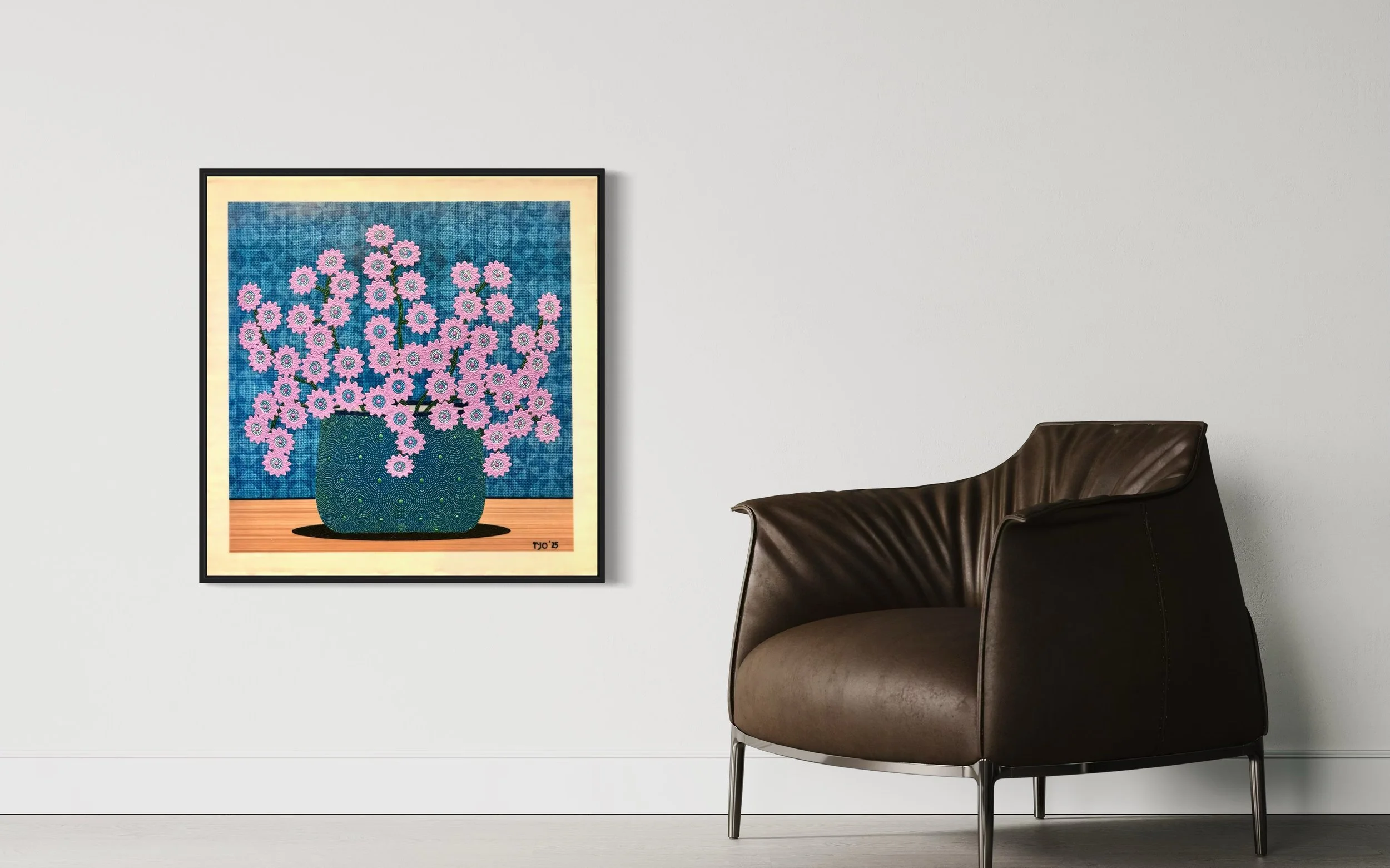
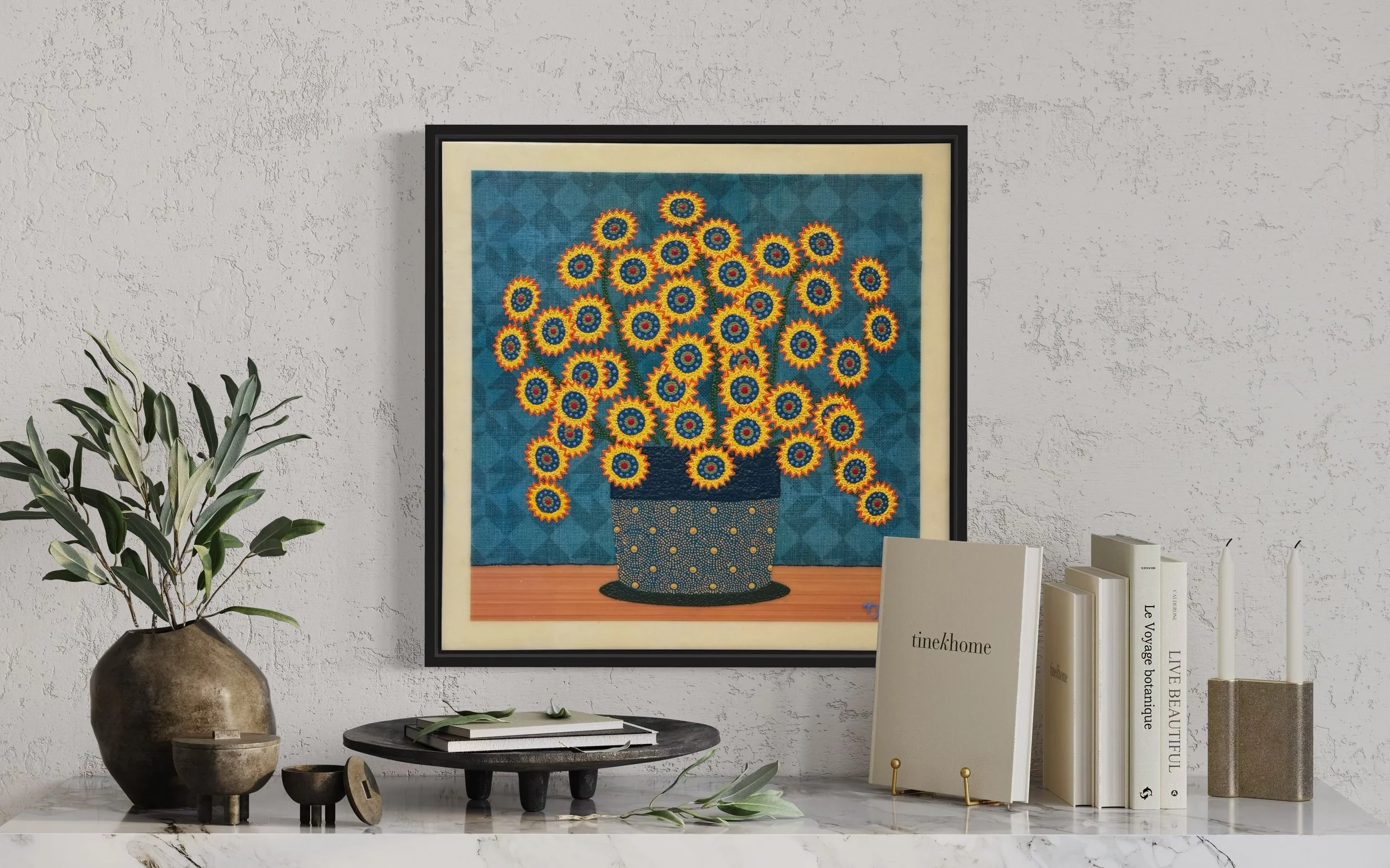
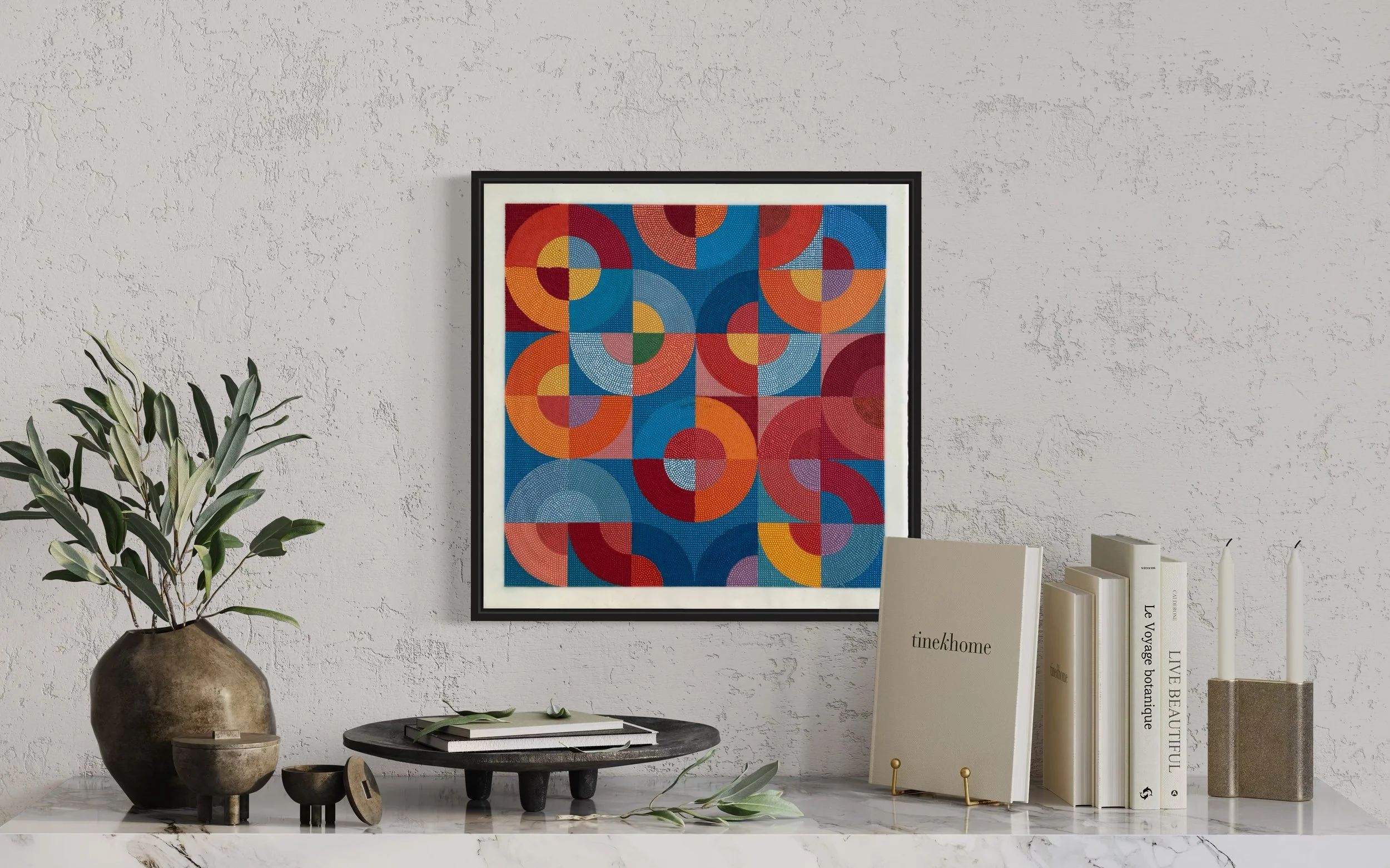
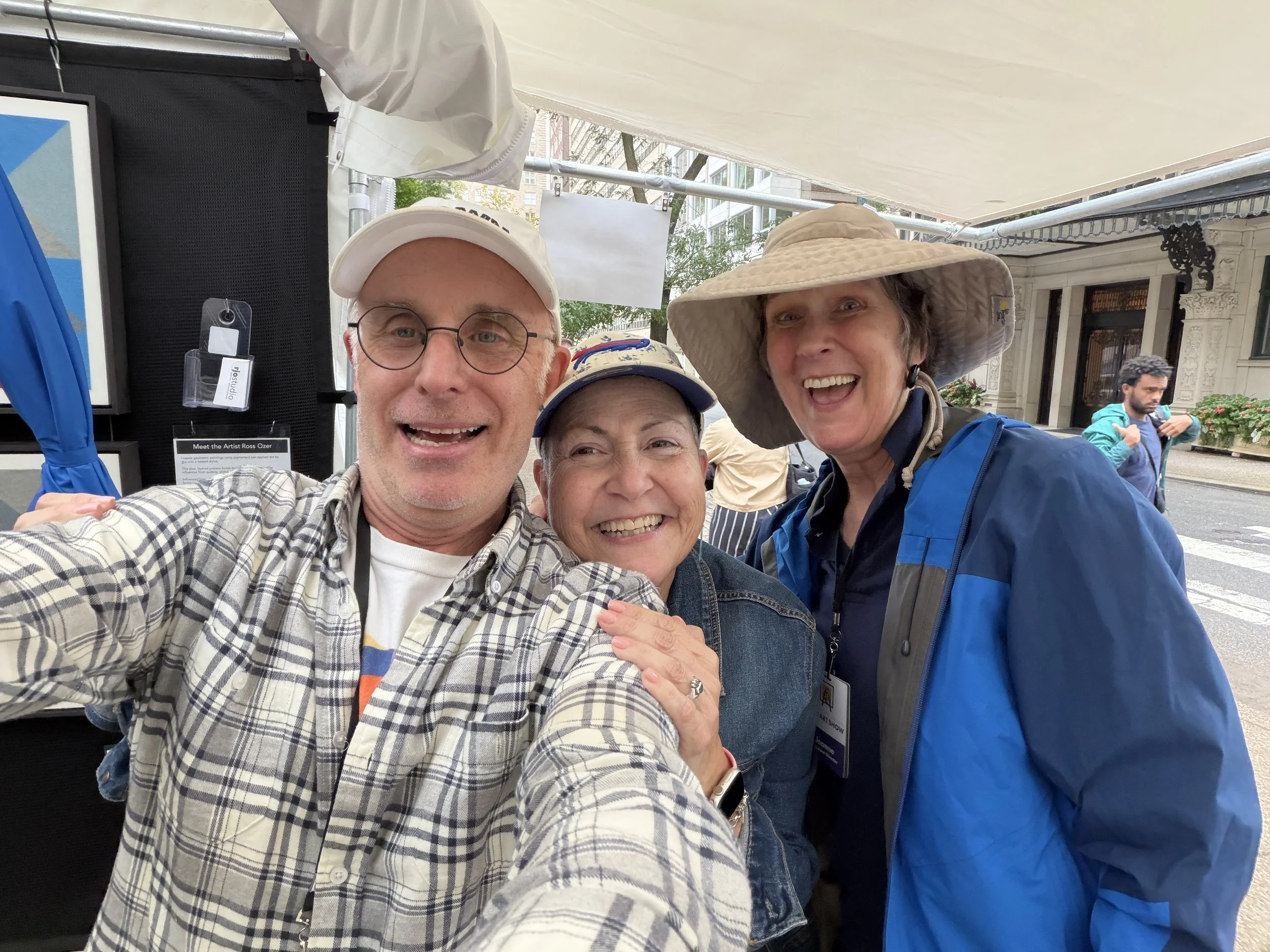
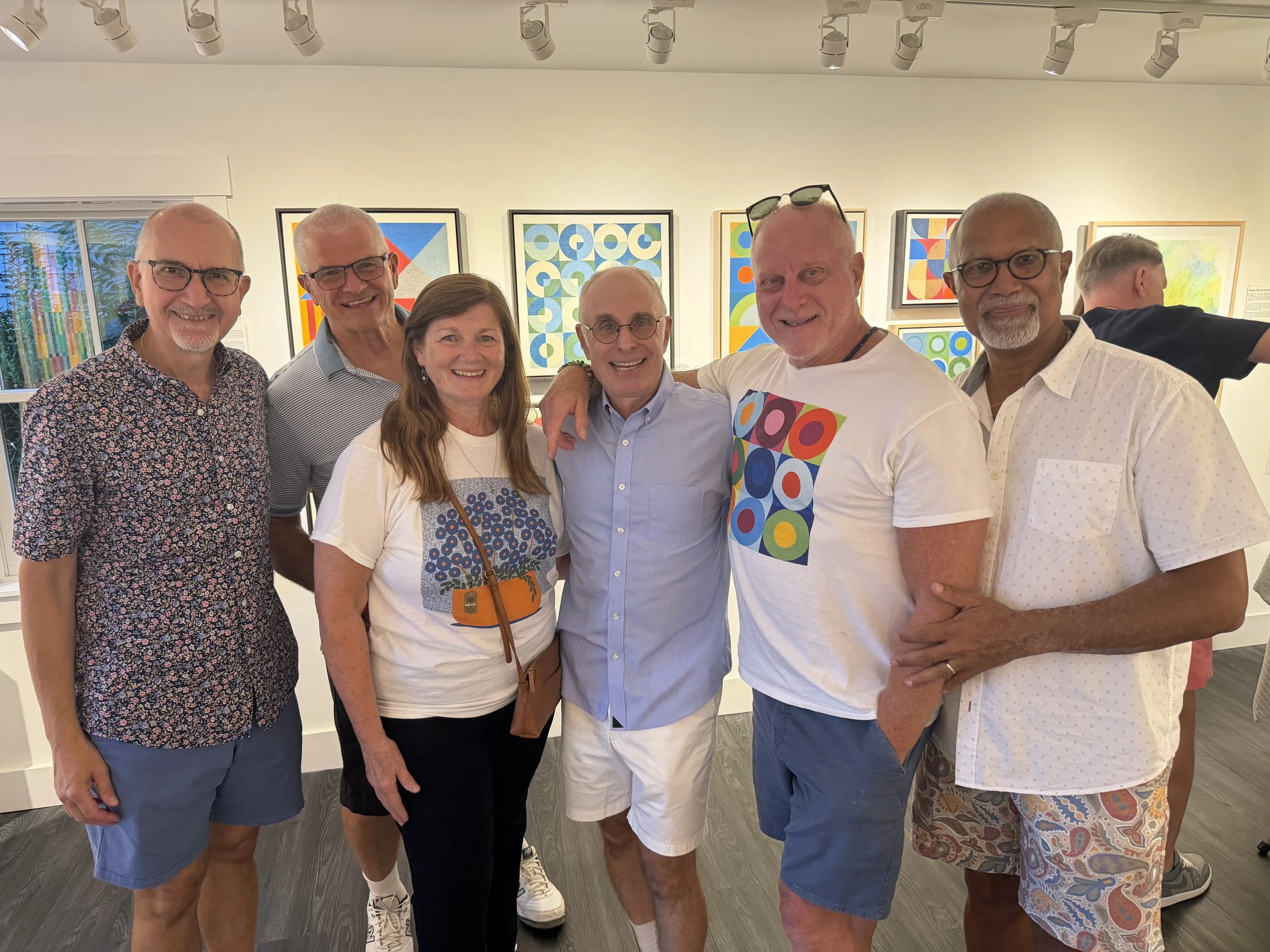
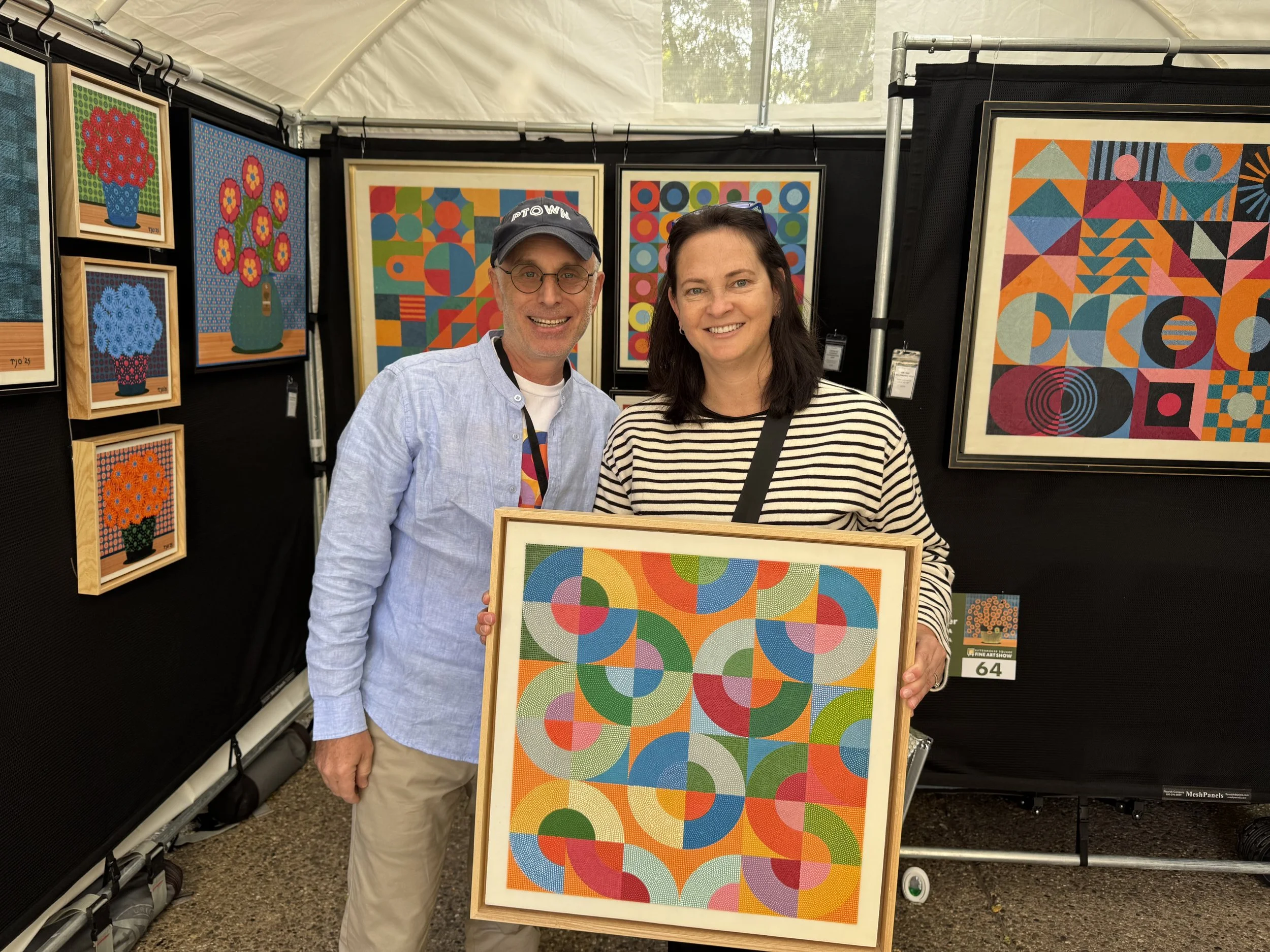
What keeps me coming back to Rittenhouse isn’t just the art. It’s the people. Old friends, new friends, fellow artists, collectors and familiar faces somehow come together around four black walls in the middle of Philadelphia.
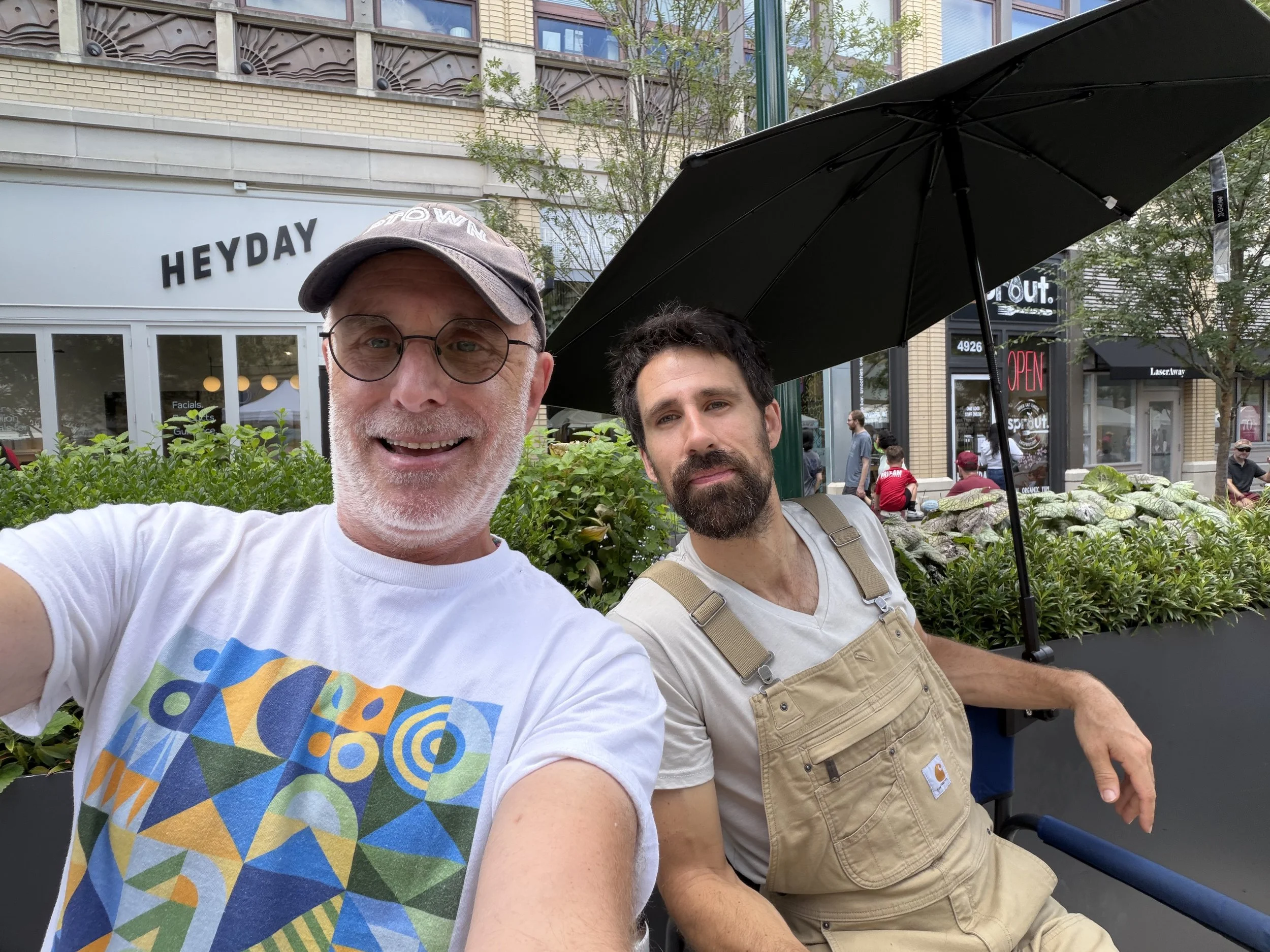
At the Bethesda Row Arts Festival, I found myself next to an artist whose work felt unexpectedly connected to my own. Different materials, different processes, but a shared fascination with geometry, repetition, pattern and texture. It was a reminder that one of the best parts of doing art shows isn’t just showing the work. It’s the artists you meet along the way.
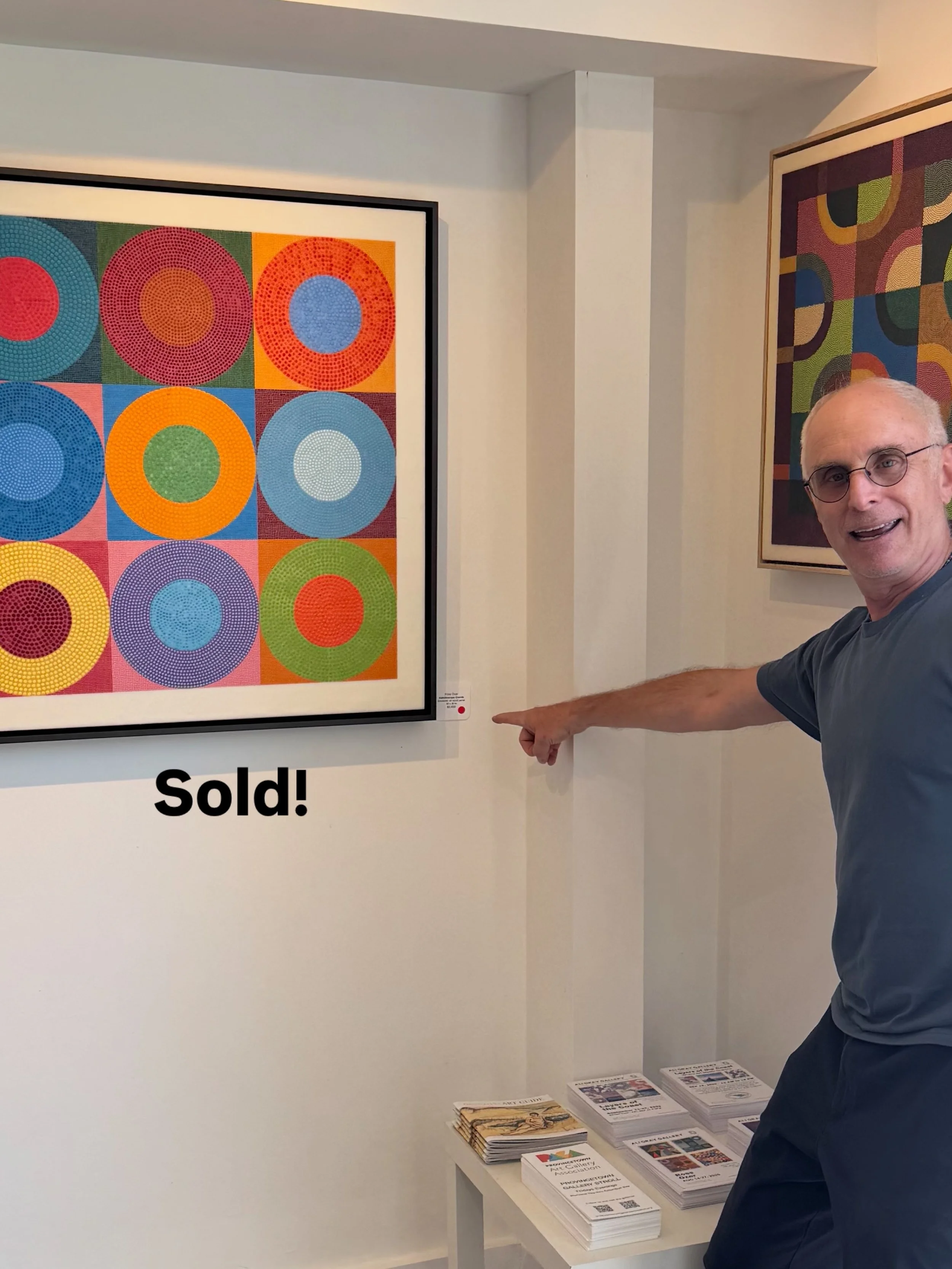
August was a whirlwind of art, connection and more than a few red dots. From my Patterned Worlds solo show at Ali Gray Gallery to seeing my art worn out in the world—and watching work find new homes—it was a month that reminded me just how much can happen in a few short weeks.
What makes an art show successful? Red dots are wonderful, but they don’t tell the whole story. I’ve started tracking both piece sell-through and dollar sell-through—and looking beyond immediate sales to the relationships and opportunities that can emerge long after a show ends.
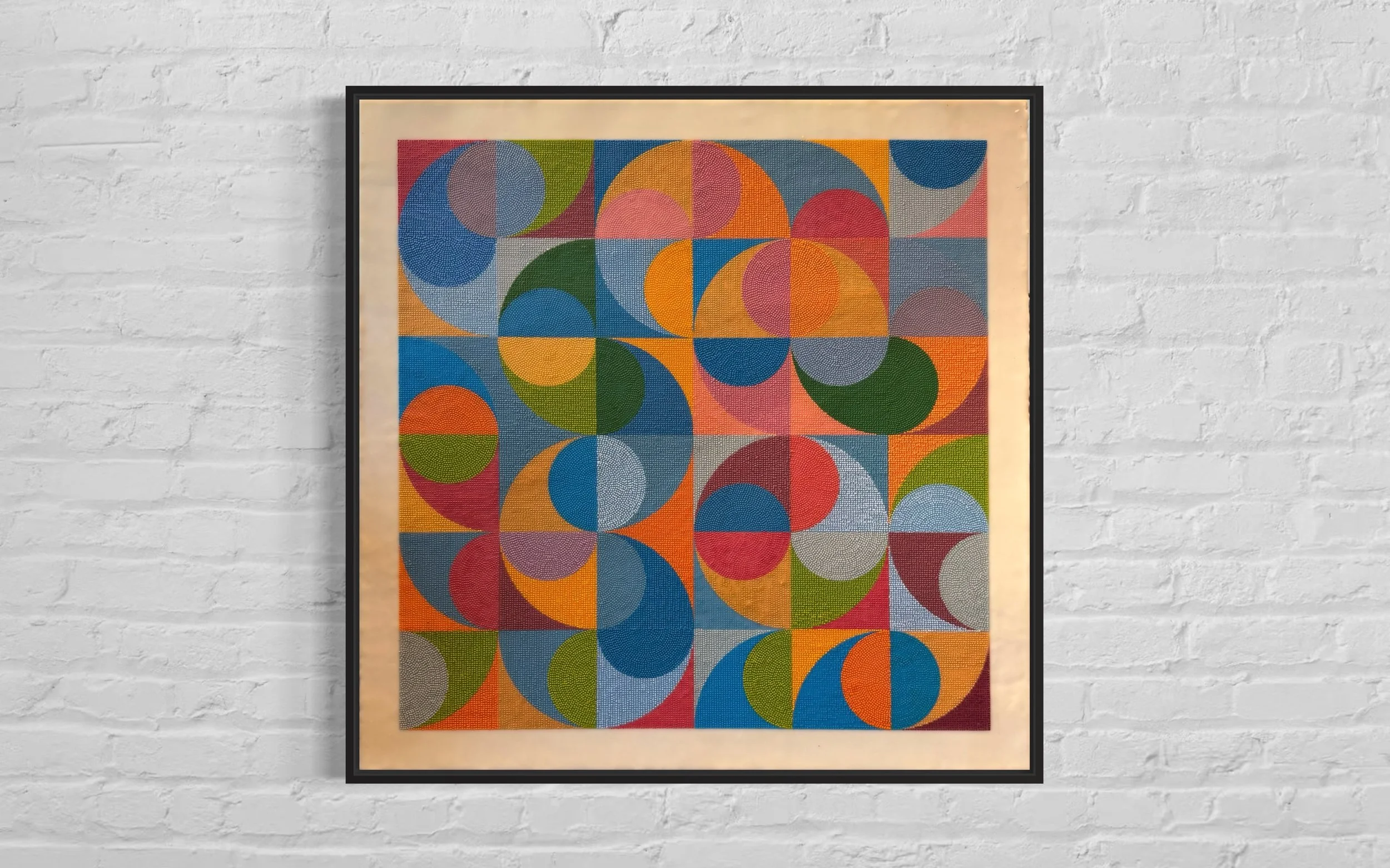
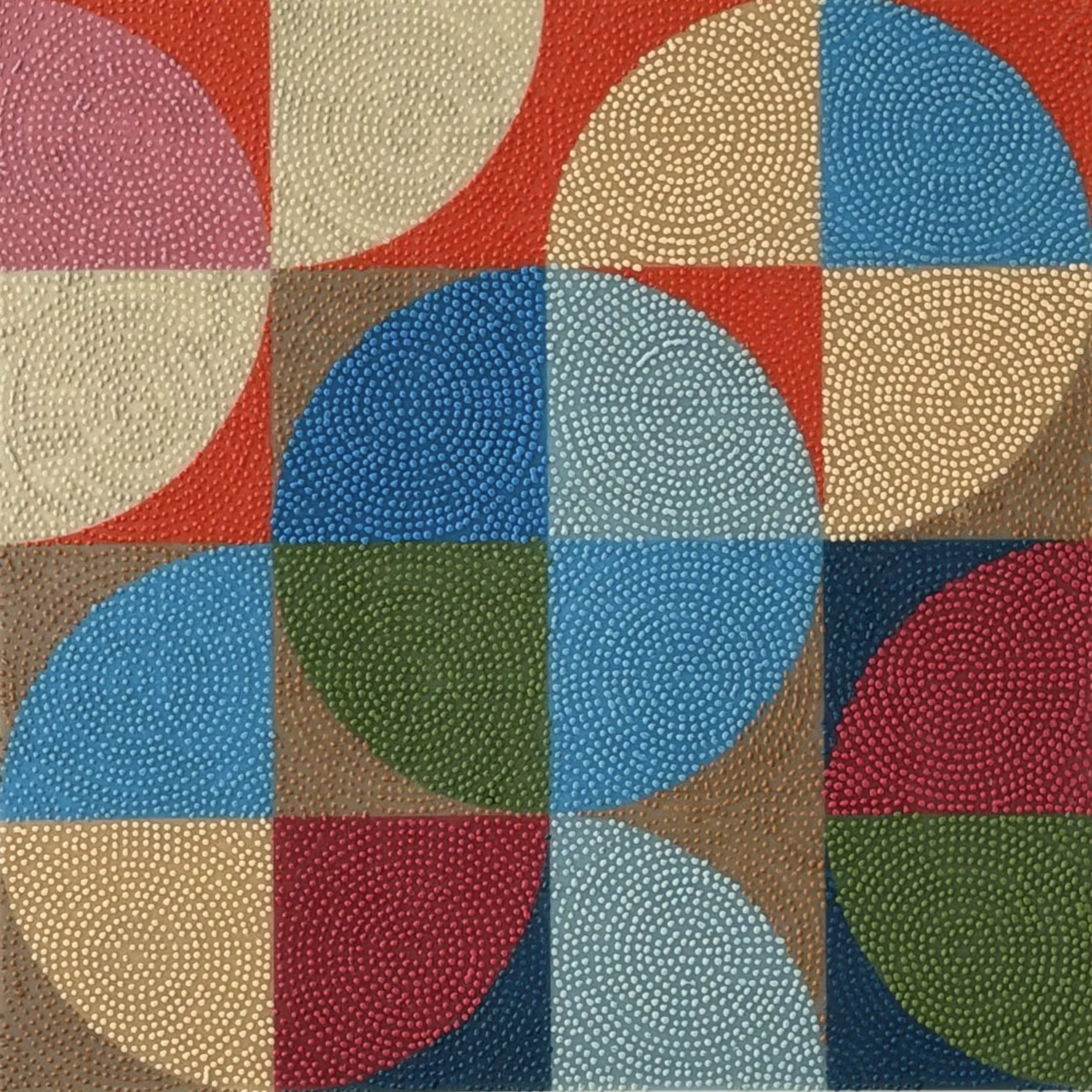
My latest Drunkard’s Path paintings explore more than the quilt block itself. Inspired by the tradition of all-over quilting stitches, I’m experimenting with surface patterns that flow across the entire composition, creating a second layer of rhythm and texture that complements—rather than simply outlines—the underlying geometry.
Collectors don’t always buy art the first time they see it. This summer, a few returning visitors reminded me how discovering art can become a conversation that unfolds over time—and sometimes across hundreds of miles.
What happens when an artist applies the principles behind his paintings to designing a brand mark? Inspired by designer Allan Peters, I explored dozens of ideas before finding a simple combination of geometry, stippling and negative space that reflects how I make my work.